by Barbara Lach
The U.S. digital infrastructure ranked 7th best in the world in 2015, according to the World Economic Forum, but we were only 53rd in affordability and 33rd in general skills of our population among 143 economically advanced nations. What it means is that while the rich are getting richer taking advantage of digital technology, a substantial part of our society, living and working in digital poverty, is being left further behind.
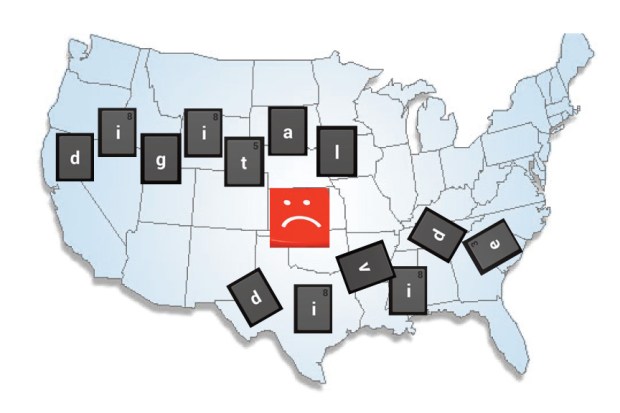 The Forum has published its annual Global Information Technology report for 14 years now to help global decision makers to evaluate the impact of information and communications technologies (ICTs) for political and economic investments. In plain English it means these reports serve as a strategic tool for big-time investors in global markets to yield huge profits, a great tool for the rich and powerful. As John Chambers, executive chairman and former CEO of Cisco Systems, said in the 2014 report, “The Internet of Everything represents a US$19 trillion global opportunity to create value over the next decade through greater profits for businesses as well as improved citizen services, cost efficiencies, and increased revenues for governments and other public-sector organizations.”
But as the informed decision makers, as well as many of us, take advantage of “the new economy” every day, two generations of digitally impoverished Americans continue to be left out of these technology-driven economic advances. Today 15 percent, or 47 million, of adult Americans do not use the Internet; 5 million U.S. households with children between the ages of 6 and 17, or more than 17 percent of the 29 million families, have no broadband access at home. In cities like New Orleans and Detroit, one-third of families do not have broadband; in Kansas City 70 percent of public school students, and more than 70 percent of urban core households, do not have access to the Internet at home.
Today more than half of Kansas City Public Schools students are forced to complete homework outside of the comfort of their home; these students frequent fast-food restaurants and public libraries in search of a free hot spot. Disconnected, they represent the second generation of Americans unable to take advantage of “the new economy.” Although the U.S. is leading in digital infrastructure among the richest nations and those with access speed into the future on a fiber highway—case in point is our very own Kansas City west of Troost—for millions of Americans, Internet at home remains a distant dream only deepening the digital divide.

 Decoding digital divides