by Barbara Lach
Digital inclusion is ageless but digital education should begin as early as kindergarten, agreed panelists at the first annual State of Digital Inclusion event hosted Dec. 8 by Connecting for Good in Kansas City. The Kansas City non-profit is a regional leader in bridging the digital divide.
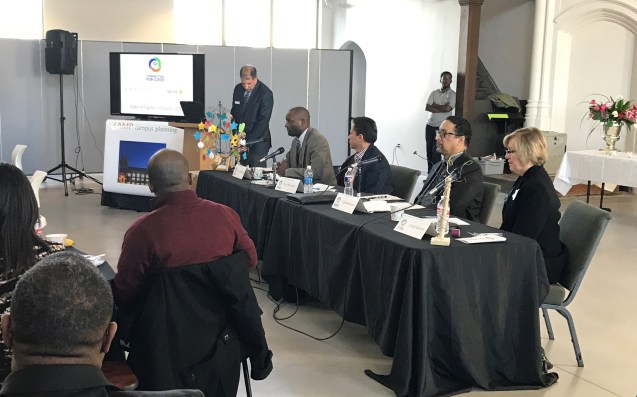
From left: Tom Esselman (standing), Mark Bedell, Chris Hernandez, Clyde McQueen, and Carole Malotte
The panel focused on a causal relationship between digital education and careers and quality of life. As an element of rudimentary education, developing digital skills should be part of K-12 curriculum, said Clyde McQueen, executive director of KC Full Employment Council. To prepare young people for careers today, digital education must start early, McQueen said as he mentioned the Kauffman Foundation’s, one of the event’s sponsors, recent announcement of an $80 million investment in postsecondary education over 10 years. Superintendent Mark Bedell, Kansas City Public Schools, also emphasized the importance of developing digital literacy and skills in K-12 as a path to successful careers and citizenship.
Another age-related aspect of digital education was raised by Carole Malotte, director of AARP Foundation SCSEP. As newcomers to digital technology, the elderly represent a substantive population group that can, and should, benefit from digital training to be able to use online services. “Success is defined by quality of life, not only by a great job,” Malotte said. Knowing how to use a computer and navigate the Internet improves the quality of life for older people.
As a community, Kansas City is facing a digital equity problem. Chris Hernandez, communications director for Kansas City, MO, said the Smart City initiative, a $15 million private-public partnership, provides funding for a free-to-riders streetcar, which connects business, arts and shopping districts, and offers free Wi-Fi coverage along the line. Despite such an initiative, digital equity of access to the Internet and skill sets across the City remains a challenge.
“As a community, we must get connected better,” McQueen said.
Tom Esselman, CEO of Connecting for Good, said his organization is building a digital inclusion ecosystem across Kansas City, in which both technology and education come together to bridge the social and economic gaps. In addition to low or no-cost broadband services and refurbished computers, Connecting for Good provides free digital training to low-income and unemployed residents of all ages.

 Decoding digital divides