The Matthew effect of digital dividends, or how open data deepens digital divide and weakens democracy

by Barbara Lach

Open data is just one of many digital dividends of new technologies, albeit an important one for modern participatory democracy. Other dividends include instant access to information, news, financial services, education, jobs, health services, social media and civic and political engagement. All these digital dividends have one thing in common—these benefits depend on broadband Internet access. Consequently, citizens who do not have Internet access, or 55 million Americans, can enjoy none of these benefits. For 17 percent of the population, open data remains closed, and with it the chance for civic engagement.
new dividends

Driven by calls for greater government transparency, opening up of public information is a noble cause in itself. But citizens can take advantage of open data only if they can access and apply the data. Data for data’s sake is meaningless; only data that can be applied is meaningful. Data application, though, requires Internet access and knowledge. Because only those with an uninhibited access to technologies and education can apply data, they are the ones who learn and profit from open data first. When information becomes available, the rich profit the most, and the poor become not only poorer but also disengaged. This is the Matthew effect, or accumulated advantage, of open data.

Today 40 states and 48 localities provide data sets to the federal online open data repository. Open data, not to be confused with big data, means that public information is accessible online to the public—it becomes a public resource. The Open, Public, Electronic and Necessary (OPEN) Government Data Act that went into effect May 25 of this year requires the government to provide all public federal information in searchable open formats freely available to anyone online. Making public information accessible online allows citizens to understand how the government spends money, for example, and thus hold public elected officials accountable. Open data of procurement processes at all government levels could shed light on how the government buys goods and services from the private sector. On a local level, open data can benefit citizens through improved city services.

Participation in governance and the process of democratization that surround the movement to open data are subject to Internet access. Improved quality of life and government services remain just a promise for all those who cannot afford an Internet connection. For example, four in five households in inner Kansas City have no home Internet access, so application of open data is not even an issue for them. They simply have no data. They are excluded from the culture of shared public information.

Universal Internet access would expand opportunities and enable civic and political engagement for all. The Matthew effect means that those without access are not only denied the advantage of having information at their fingertips but also that they continue to fall further behind in terms of civic engagement. They are excluded from the participatory political process and the tech-driven government transparency–both predicated on Internet access—which makes the concept of informed and participatory citizenry elitist. Only the elite–the privileged and technologically savvy–enjoy open data dividends. The Matthew effect of digital dividends leaves almost 50 million Americans without a civic voice.

Tri logo

Documentary shows what digital divide means


doc


by Maria Smith

Director and Producer, 2015

A stark 30 percent of Americans do not have wired Internet access. In our information-driven world, this digital divide raises important questions of social inequality and national economic stagnation. One Nation, Disconnected is a short documentary that wrestles with these issues. It is the story of a young woman who faces the daily challenges of today’s digital divide.


Berkman Center for Internet and Society

Harvard Law Documentary Studio


FCC’s Lifeline offers two ventis toward greater access

by Barbara Lach

$9.25 can buy two ventis at Starbucks—or one fifth of an Internet connection at home. But the 64 million Americans who cannot afford broadband most likely won’t be buying either.

With a recent proposal to offer low-income families a monthly subsidy for broadband access, the Federal Communications Commission has made a coffee-cup step toward bridging what has become the persistent digital divide. The $9.25 monthly subsidy that modernized federal Lifeline program offers, however, does not go far enough to make a meaningful difference for millions of disconnected Americans.

Source: FCC.gov

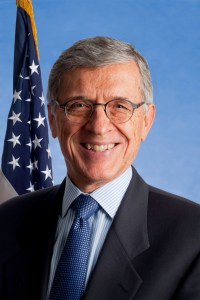
FCC Chairman Tom Wheeler

In a March 8 blog post, FCC Chairman Tom Wheeler and Commissioner Mignon Clyburn announced a new federal monthly subsidy for qualified households in the amount of $9.25 to help pay for broadband access for those who “live on the wrong side of the digital divide” [“Wrong” I am sure does not imply a fault of their own; author’s note] Modernizing the $1.7 billion FCC Lifeline program, which was initially established in 1985 to ensure low-income Americans have access to basic phone services so they may seek employment, medical help and rise out of poverty, is a much needed step in the right direction—albeit two lattes’ worth. The new plan was approved Mach 31 by commissioners’ vote 3:2.

“We can recite statistics all we want, but we must never lose sight of the fact that what we’re really talking about is people – unemployed workers who miss out on jobs that are only listed online, students who go to fast-food restaurants to use the Wi-Fi hotspots to do homework, veterans who are unable to apply for their hard-earned benefits, seniors who can’t look up health information when they get sick,” Chairman Wheeler said. “Internet access has become a pre-requisite for full participation in our economy and our society, but nearly one in five Americans is still not benefitting from the opportunities made possible by the most powerful and pervasive platform in history.”

FCC’s Lifeline has been criticized over the years for fraud and unaccountable spending. The new ruling establishes a third-party National Eligibility Verifier to confirm subscriber eligibility and promises transparency by making the Lifeline data available, including subscriber counts by provider. FCC set the program’s budget at $2.25 billion budget, indexed to inflation. Information for low-income consumers is available at https://www.fcc.gov/general/lifeline-program-low-income-consumers.

Because most U.S. Internet providers offer basic broadband services at a price that is higher than four times the $9.25 subsidy, this new Lifeline is more of a gesture in the right direction than practical help for most low-income American families. The FCC effort seems to be designed to encourage Internet providers, such as Comcast, Time Warner Cable and AT&T, to offer services in neighborhoods from which they have been traditionally absent. The access providers, though, may refuse to shell out the remaining balance, in which case most low-income families won’t be buying the remaining 8 ventis’ worth of Internet any time soon, leaving the FCC’s Lifeline only a gesture of good latte at best.

Tri logo small